I build companies and products, not just designs. From product strategy and GTM positioning to engineering collaboration and growth metrics. Systems driven, execution obsessed, focused on shipping features that generate revenue.
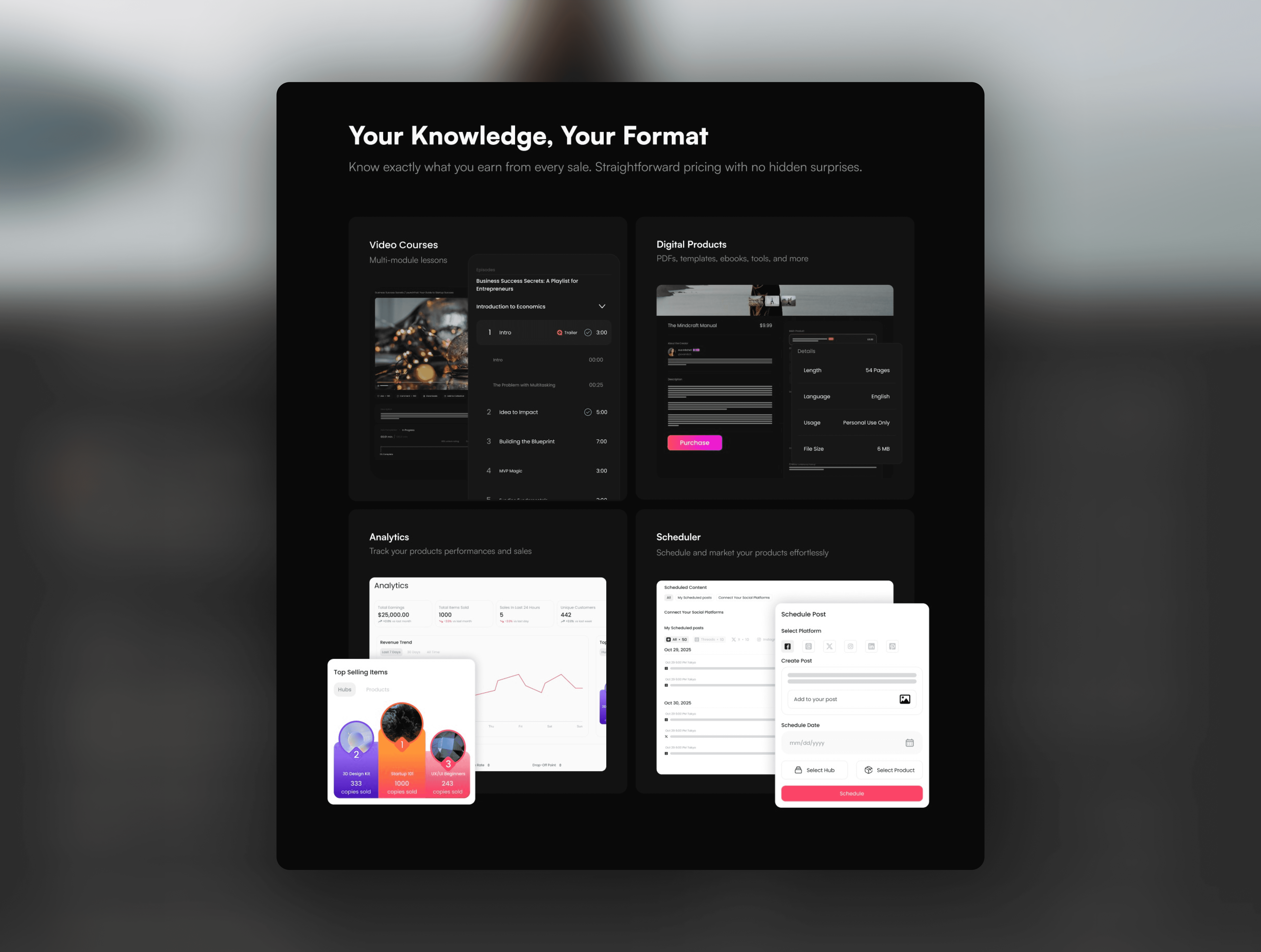
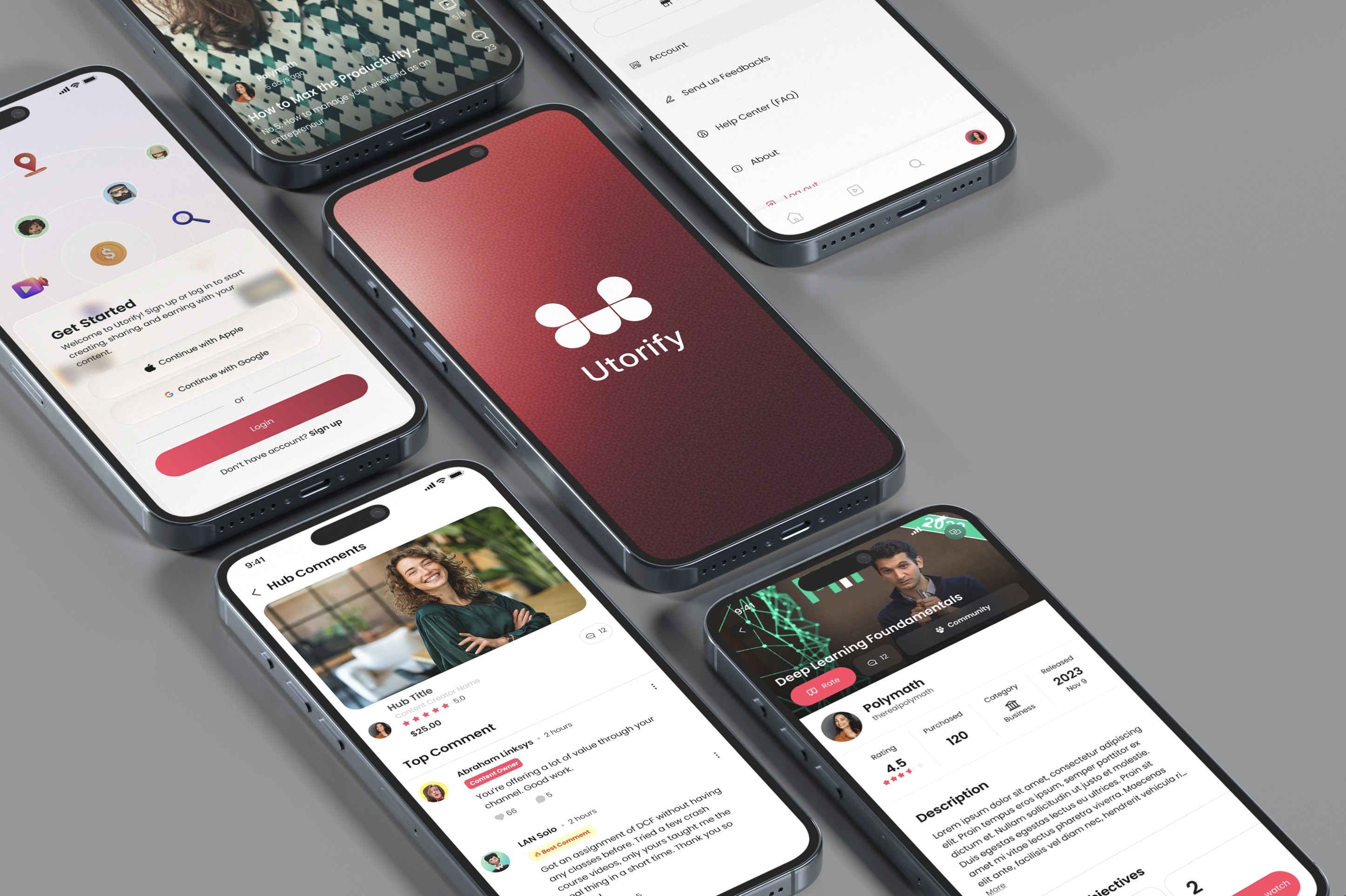
Utorify comes from yutori (ゆとり), a Japanese concept meaning spaciousness, room to breathe, the margin that makes life livable.
I started building it because I saw a problem in the creator economy that nobody was solving. Every platform promises freedom but delivers complexity: 15 different tools, dozens of integrations, endless dashboards. Creators spend more time managing infrastructure than creating. The irony is cruel, we've built an economy that punishes the very people it's supposed to liberate.
The thesis behind Utorify is simple: platforms add friction because they're designed by people who've never sold anything themselves. They optimize for feature lists, not for the creator sitting at midnight trying to figure out why their checkout flow broke.
I'm building Utorify as both a creator and a founder, someone who's felt every pain point personally. Every feature, flow, and default setting comes from actually doing the work.
The goal isn't to build the most powerful platform. It's to build the most honest one. Upload, publish, sell. Just the infrastructure that people can use to get paid and the spaciousness to keep creating.
Right now I'm architecting everything, product strategy, UI/UX for web and mobile, growth systems, engineering collaboration—taking it from concept to thousands of users. It's where I test what actually works versus what sounds good in theory. Everything I recommend to clients, I've proven in Utorify first.
Great products don't come from consensus. They come from conviction about what matters and the courage to cut everything else. Most companies fail not because they build the wrong thing, but because they build too many things. They mistake activity for progress, features for value, and complexity for sophistication.
I build with a different lens: start with the problem that actually needs solving, not the solution that's easy to build. Understand the customer's job so deeply that the product becomes obvious. Then execute with ruthless focus. Every feature should justify its existence. Every flow should have a clear purpose. If something doesn't directly serve the user's goal or the business model, it doesn't ship.
Speed is a competitive advantage that most people undervalue. The gap between idea and execution is where most companies die. Not from lack of funding or talent, but from hesitation, overthinking, and waiting for perfect conditions that never arrive. The founders who win are the ones who ship fast, learn from real users, and iterate based on truth rather than assumptions. Theory is cheap. Shipping is expensive. Revenue is the only validation that matters.
The hardest part of building isn't the building itself. It's saying no. No to good ideas that aren't great. No to features that dilute focus. No to partnerships that feel impressive but don't move metrics. Every yes is a thousand nos. That's what strategy actually means.
Looking good isn't the goal. Being useful is.
Most design fails because it optimizes for the wrong thing. Designers chase aesthetics, awards, portfolio pieces. They forget that people don't use products because they're beautiful. They use them because those products solve a problem faster, clearer, simpler than any alternative.
Minimalism isn't about removing decoration. It's about removing decisions. Every unnecessary choice is cognitive load. Every extra step is friction. Every moment of confusion is a moment the user questions whether your product is worth their time. Great design makes the path so obvious that the interface becomes invisible.
I design for the person at midnight who's tired, distracted, and just wants the thing to work. Not for the design critique. Not for the conference talk. For the human who has ten other tabs open and thirty other problems competing for their attention. If they have to think, I've failed.
The best products feel like they were always meant to exist. There's no learning curve because the design matches how people already think. No manual needed because every interaction follows logic, not convention. Useful design doesn't announce itself. It just works.
Engineering isn't about building the most sophisticated system. It's about building the right system that can evolve.
The best engineering philosophy I've encountered focuses on continuous improvement over heroic intervention. Build small, ship often, fix quickly. Don't wait for the perfect architecture. Start with what works, then make it better based on what you learn in production. Every feature is a hypothesis. Every deploy is a test. Real users will teach you things no amount of planning can predict.
Quality comes from discipline, not perfection. Write clear documentation. Handle edge cases before they break. Test the unhappy paths as rigorously as the happy ones. Leave the codebase better than you found it, even if it's just renaming a variable or adding a comment. Small improvements compound. That's how you build systems that last.
I collaborate with engineers as partners, not vendors. I speak their language because I've been in the code. I write specs that answer questions before they're asked. I account for loading states, errors, empty states, permissions, offline scenarios. I think through what happens after every click because engineering is about systems, not features. A beautiful design that ignores edge cases isn't beautiful. It's incomplete.
The goal isn't to build something impressive. It's to build something reliable that can be maintained, extended, and improved by the team six months from now when everyone's forgotten the original context.